
Dubai World Dental Meeting

[webinars_list]

Orthodontic Course 1

Title: Skeletal Anchorage with Interradicular Miniscrews

Bernd-200x200
Fayez-200x200

Accreditation: ADA CERP: 7.75 cr (DHA/MTS/ACC/26-0204/A) – 8 CPD Credit Points ICHS CME Credits: 7.75 cr

AED 1,575 (Early Bird ‘till 6th December)

AED 1,743 (Standard)

Abstract:

Skeletal anchorage using interradicular TADs in the maxilla or mandible allows for vertical or mesio-distal tooth movements without undesired collateral movements of other teeth. To date, larger mesio-distal bodily movements of lower buccal segments require invasive alternatives such as mento-plates or bone-anchors. A new alternative is the “Ulm mandibular slider” supported by two interradicular TADs. This workshop with hands-on (TAD insertion and slider adaptation) comprises the application of interradicular TADs for various indications, with a specific focus on the Ulm mandibular slider. This new appliance is particularly valuable for treating adults, either alone or in combination with aligners.

Introduction:

TADs have tremendously expanded the possibilities of orthodontic treatment solutions. Maximum anchorage may be provided in both jaws by interradicular TADs. The mandible is often considered problematic, because it does not provide an optimal TAD insertion region such as the anterior palate. An innovation is the “Ulm mandibular slider” supported by two interradicular TADs in the premolar/canine region. It provides enough stability for larger mesio-distal molar movements. Hence, main indications of this novel approach are moderate class-III, anterior crowding, or space closure in first molar extraction cases or agenesis of second premolars. The rigid buccal guiding wire enables bodily molar movements without additional wire guidance. This advantage is particularly relevant in treatment of adults either with sliders alone or combined with aligners. Based on numerous patient examples, this full-day precongress course shows how skeletally supported appliances expand the orthodontic toolbox and prevent compromised treatment results. It also explains the most important insertion guidelines for successful interradicular TAD applications. The hands-on part of the course is designed to provide participants with practical skills with a particular focus on interradicular TAD insertion and adaptation of the Ulm mandibular slider to 3D printed study models.

Learning Objectives:

  1. Overview of the application of skeletal anchorage in both the maxilla and mandible
  2. Knowledge of the most important guidelines for interradicular TAD insertion
  3. Creative integration of TADs into the orthodontic toolbox
  4. Basic rules and practical skills for successful TAD insertion
  5. To know different variants of the Ulm mandibular slider and its key indications
  6. Practical skills for clinical application of the Ulm mandibular slider

Who should attend:

  1. General Practitioners
  2. Orthodontists
  3. Ortho Post Graduate Students
  4. Orthodontic Residents

Course Outline:

09:00 – 10:15 Lecture: Introduction into skeletal anchorage
10:15 – 10:45 Lecture: Interradicular TADs – insertion guidelines + space closure mechanics
10:45 – 11:00 Coffee Break
11:00 – 11:45 Lecture: Interradicular TADs in upper & lower jaws – indications, mechanics & patient examples
11:45 - 12:15 Lecture: Demonstration: Insertion of TAD 1st variant & space closure mechanics
12:15 – 13:00 Hands on: Insertion of TAD 1st variant & space closure mechanics
13:00 – 13:45 Lunch Break
13:45 – 14:30 
Lecture: Development of Ulm mandibular slider (2 variants of TADs) & instruments/materials required
14:30 – 15:00Demonstration – Insertion of 2 TADs (analogue & guided) & adaptation of Ulm mandibular slider to lower jaw model
15:00 – 15:15 Coffee Break
15:15 – 16:30 
Hands on: Insertion of 2 TADs + Ulm Mandibular Slider
16:30 – 18:00 Lecture: Ulm mandibular slider – patient examples, troubleshooting, summary


Demonstration and Workshop:

  1. Provided Materials and Equipment (for each participant):
    1. TADs
    2. Different components of the Ulm Mandibular slider
    3. Necessary instrumentation for inserting the TADs
  2. Procedure and Demonstration Steps:
    1. Insertion of TAD 1st variant in the mandible
    2. Design and adaptation of skeletally anchored space closure mechanics in the mandible
    3. Manual insertion of TAD 2nd variant in the mandible
    4. Guided insertion of TAD 2nd variant in the mandible
    5. Adaptation of Ulm Mandibular slider to lower jaw model
  3. Materials to be brought by participant (If required):
    1. Dental explorer
    2. Mosquito forceps
    3. Heavy wire bird beak pliers
    4. Aderer 3 prong pliers maxi
    5. Heavy wire cutter (for lab wires)
    6. Weingart universal pliers

About the Speaker:

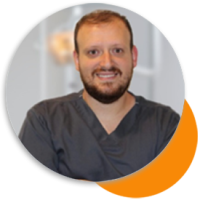
Prof. Dr. Dr. Bernd Lapatkireceived the degree in dentistry from the University of Freiburg, Germany, in 1994. He defended his thesis leading to the Dr. med. dent. degree in 1998, and his Habilitation thesis on the pathogenesis and treatment stability of cover-bite and Class II Division 2 malocclusion in 2007. He also received a Ph.D. degree in neurophysiology from Radboud University Nijmegen (NL) in 2010 for the electrophysiological characterization of the facial motor system at a motor unit level. His clinical career started in 1995 with practicing as a general dentist for two years before he began his postgraduate study at the Department of Orthodontics, Freiburg University Medical Center. During his clinical work at this department as Specialist in Orthodontics from 2000 to 2009 he was also a Research Fellow at the Department of Clinical Neurophysiology, Radboud University Nijmegen Medical Center, The Netherlands. Since 2009 he has been a Full Professor and Head of the Department of Orthodontics at the Ulm University Medical Center. From 2013 – 2019 he was the Director of the Centre of Dentistry, and since 2019 he is the Dean of Studies in Dentistry at this University. Bernd Lapatki was awarded in 1999 by the Faculties of Medicine and Applied Sciences of the University of Freiburg for the best dissertation in the field of medicine/medicine technique. In 2004, he received the Alex Motsch Award by the German Society of Dentistry and Oral Medicine, and the Arnold Biber Award (the highest scientific award of Orthodontics in Germany) by the German Orthodontic Society in 2007. The research of this group focuses on the development of methods for clinical force-moment monitoring in orthodontics, mechanical evaluation of orthodontic treatment approaches including multi-bracket appliances and aligners, and the (patho-)physiology of the facial and masticatory motor systems. His clinical focus areas are skeletally anchored treatment mechanics, segmented arch techniques and in-office aligner therapy

Dr. Fayez Elkholy is a Senior Consultant in the Department of Orthodontics at the University Medical Center in Ulm, Germany, where he is currently pursuing his habilitation. After completing his dental education at Alexandria University, Egypt (1997-2003) and practicing general dentistry, he moved to Germany for his specialist training. He became a Specialist Orthodontist in 2013 after finishing his residency (2009-2013). In 2016, Dr. Elkholy earned his doctoral degree with an experimental study focused on aligner therapy. Since then, he has served as Senior Consultant in the Department of Orthodontics at the University Medical Center in Ulm. His expertise spans aligner therapy, segmental arch mechanics, and skeletal anchorage, notably including the development of the Ulm Mandibular Slider. A recipient of multiple scientific awards for his work on aligner biomechanics, Dr. Elkholy has significantly contributed to orthodontic literature and frequently presents at international congresses.

Oral Implantology Course

Title: Pterygoid Introduction and Osseodensification Theory & Hands-on Course

Costa-200x200
Petros-200x200
anthony-200x200

Accreditation: ADA CERP: 7 cr (DHA/MTS/ACC/26-0226/A) – 7 CPD Credit Points ICHS CME Credits: 7 cr

AED - 1,575 (Early Bird till 05th December)

AED - 1,785 (Standard)

Abstract:

Reconstruction of the atrophic maxilla can be challenging due to inadequate quantity and quality of bone often requiring time consuming and costly grafting procedures which can dictate up to a one-year delayed loading protocol.
An accelerated treatment protocol with immediate function can be made possible with the use of remote skeletal anchorage using the Pterygoid process of the Sphenoid bone.
This in-depth Pterygoid theory workshop will focus on the up till now relatively under-evaluated and under-used Pterygoid implant.

The “how and why” of pterygoid implants will be addressed in detail viz:

  1. relevant surgical anatomy, 
  2. indications and contraindications 
  3. step-by-step surgical technique
  4. mistakes, problems & complications 
    The value of full graft resorption and healthy host bone will be discussed along with a longer-term case assessment to show these benefits.
Osseodensification is an evidence-based approach to implant osteotomy preparation that enhances implant stability and bone density without compromising healing. This lecture will present the biomechanical, histological healing timeline, and clinical data of Osseodensification. It will discuss bone plasticity and its clinical effect and will also cover the clinical versatility of this novel technique including Sub-Crestal Sinus Auto Grafting, Ridge Expansion, Immediate Implant Placement with Osseodensification, and Guided Expansion Graft. Several clinical protocols will be outlined.
Recent research from the wider medical community on Calcium Phosphates offers a new explanation showing how these materials up-regulate host bone regeneration with their osteoinductive potential. 
When considered in combination with a new strand of research into osteoimmunology, dental implantology gives a much clearer understanding of the host response to foreign body placement, healing and the reason why some graft materials appear to work more quickly than others.
During this seminar, the speaker will examine this research, among other research on the topic in recent years, to show the concept of true host bone regeneration and the importance of using resorbable materials due to the inherent risks of residual graft remaining in the site long-term.
These concepts will be demonstrated with clinical cases from the speaker’s experience, examining the surgical protocols to optimize outcomes.  Cases will include routine bony defects, large-scale full-arch regeneration, socket grafts, sinus augmentations, perio defects, peri-implantitis and apicectomies and cyst site regeneration.  The speaker will demonstrate a variety of delayed and immediate placements with long-term follow-ups.

Introduction:

Osseodensification is a groundbreaking technique in the field of dental implantology that has revolutionized the way in which implant osteotomies are prepared. In traditional implant placement, drills are used to prepare the bone to receive the implant. However, when using drills, the cutting forces can lead to necrosis of the surrounding bone tissue. In contrast, Osseodensification uses specially designed burs, which densify and condense the bone without removing its structure, leading to the creation of a more stable implant site. This technique not only improves osseointegration but also provides an increase in implant primary stability. Osseodensification takes advantage of the natural bone plasticity. This technique leads to faster healing and greater bone-to-implant contact (BIC), improving implant success rates. Moreover, Osseodensification can be used in a wide range of clinical situations, such as sinus floor elevation, ridge expansion, and immediate implant placement, making it a versatile treatment option for clinicians. Overall, Osseodensification provides an innovative and clinically effective solution for dental implant placement that enhances implant stability and reduces complications, providing a more predictable and successful outcome for patients.

Learning Objectives:

At the end of this workshop participants should be able to:

  • Have a good understanding of the relevant surgical anatomy for placing Pterygoid implants
  • Execute step-by-step the workflow for Pterygoid implant placement
  • Recognize and prevent incorrect Pterygoid implant placement & complications.
  • Evaluate the effectiveness of Osseodensification in improving implant stability and bone density compared to traditional implant placement techniques.
  • Differentiate the clinical versatility of Osseodensification in various implant placement procedures, such as Sub-Crestal Sinus Auto Grafting and Ridge Expansion.
  • Construct a clinical protocol for the optimal utilization of Osseodensification in the implant placement sequence.
  • Analyse the biochemical and histological healing timeline in Osseodensification compared to traditional implant placement techniques.
  • Implement the proper diagnostic criteria necessary for selecting patients who can benefit most from Osseodensification in implant placement.
  • Have a knowledge of how the bone remodels
  • Looking at why using Alloplastics to generate the hosts own bone around implants and the patient’s own teeth can lead to better stability and results.
  • Explain and recognise techniques for gaining the best results.  

Who should attend:

  • General Practitioner
  • Specialists
  • Dental Students
  • Residents/Interns

Course Outline:

09:00 – 10:00 Lecture: The scientific principle of Osseodensification – Dr. Petros Yuvanoglu
10:00 – 11:00 Lecture: Subcrestal sinus lift protocols with Osseondensification – Dr. Costa Nicolopoulos
11:00 – 11:30 
Coffee Break
11:30 – 13:00 
Lecture: Pterygoid implants with Osseodensification - Dr. Costa Nicolopoulos
13:00 – 14:00 Lunch Break
14:00 – 15:30 Hands-on: “How to use sinus graft– Dr. Anthony Rizk
15:30 – 16:00 Coffee Break
16:00 – 17:30 Hands-on: Sinus lift Protocols 2 & 3 on model and implant placement
17:30 – 18:00 Discussion and Q & A

Demonstration and Workshop:

  1. Provided Materials and Equipment (for each participant):
    1. Bone graft material (allograft) (1:1 doctors)
    2. Sinus Model (1:1 doctors)
    3. Engine with irrigation (1:2 doctors)
    4. Handpiece (1:2 doctor)
    5. Bur Kit (1:2 doctors)
    6. 4,2 X 13mm implant (1:1 doctors)
    7. High indicator 100 Ncm Torque Wrench – with driver for placing the implant (1:2 doctors)
    8. Drilling Tray (1:1 doctor)
    9. Gloves
  2. Procedure and Demonstration Steps:
    1. Hands-on - Osseodensification of animal bone and implant placement
    2. Hands-on – Sinus lift Protocol 2 with alloplast graft on model
    3. Hands-on – Sinus lift Protocol 3 with alloplast graft on model

About the Speaker:

Dr Costa Nicolopoulos BDS cum laude, FFD(SA)MFOS qualified as a dentist in 1984 receiving his dental degree “cum laude” from Wits University, Johannesburg, South Africa. He received numerous awards including the Gold Medal of the Dental Association of South Africa for the most outstanding graduate. In 1990 he completed his 4-year full time postgraduate Maxillo-Facial & Oral Surgery training at Wits University and was awarded FFD from the College of Medicine of South Africa. Since 1991 he has been in full-time specialist Maxillo-Facial & Oral Surgery private practice concentrating on immediate loading of dental implants. To date, he has placed over 40.000 dental implants. In 2011, with Dr Petros Yuvanoglu, he established his private practice in Dubai. Dr Costa has been an invited speaker at numerous organizations, including the Academy of Osseointegration (AO), American Academy of Aesthetic Dentistry (AAED), Osseodensification Academy, Association of Dental Implantology (ADI) and American Association of Oral & Maxillofacial Surgeons (AAOMS) as well as Hellenic Association of Oral & Maxillofacial Surgeons (HAOMS). He is also a Diplomate of the International Congress of Oral Implantology (ICOI).

Dr. PETROS YUVANOGLU D.M.D. Adjunct Faculty department of Postgraduate Prosthodontics, Tufts University School of Dental Medicine Dr. Petros Yuvanoglu qualified as a dentist in 1995, receiving his dental degree Summa Cum Laude from Semmelweis University in Budapest. He graduated with exceptional high grades, placing him at the top of his class as valedictorian. In 1998, he completed his three-year full-time postgraduate specialist prosthodontist training at Tufts University in Boston, USA, and was awarded a certificate in the dental specialty of prosthodontics. He currently holds an appointment as adjunct faculty at Tufts University. Since 1999, Dr. Yuvanoglu has been in full-time private practice as a specialist prosthodontist, focusing on the prosthodontic rehabilitation of teeth and dental implants. He is a renowned key lecturer at numerous national and international dental congresses and has been invited to speak at numerous prestigious organizations, including the American Academy of Esthetic Dentistry (AAED), the American Association of Oral and Maxillofacial Surgeons (AAOMS), and the Pikos Institute. In 2011, he and Dr. Costa Nikolopoulos established their private clinic in Dubai, UAE, which has been awarded the title of Branemark Osseointegration Center Dubai and Zaga-Zygoma Implant Center Dubai.

Dr. Anthony Rizk is a highly accomplished dental professional with extensive experience in oral and dental surgery, as well as implantology. He earned his Doctor of Oral and Dental Surgery degree from Saint Joseph University in Lebanon in 2013, followed by a Diploma in Implantology in 2015. Dr. Rizk holds licenses to practice in both Lebanon and Saudi Arabia, where he has built a distinguished career. His clinical experience includes a private practice in Beirut, Lebanon, and a role as practitioner and medical director at a private clinic in Riyadh.
He is also a respected educator, having developed and lectured on an Implantology Privilege Program and conducted numerous lectures across the MENA region.

Restorative Dentistry Course
FULLY BOOKED

Title: Dental Adhesives, Anterior Posterior Direct Restorations

fadi-200x200

Accreditation: ADA CERP: 7 cr (DHA/MTS/ACC/26-0198/A) – 7.5 CPD Credit Points ICHS CME Credits: 7 cr

Dentist – AED 1,500/Student- 900 AED (Early Bird ‘til 05th December)

Dentist – AED 1,680/Student- 1,060 AED (Standard)

Abstract:

This comprehensive course explores the science and clinical application of dental adhesives and composite restorations. Participants will learn the principles of adhesion, compare adhesive systems, and master protocols for optimal enamel and dentin bonding. The program covers esthetic anterior layering techniques and functional posterior composite placement. Emphasis is placed on achieving longevity through proper material selection, handling, and finishing. Practical tips, troubleshooting strategies, and evidence-based guidelines ensure participants leave with enhanced clinical confidence.

Introduction:

This course provides a comprehensive, evidence-based framework for understanding adhesive systems, from fundamental bonding principles to advanced clinical protocols. Participants will gain hands-on insights into selecting the right adhesive, controlling moisture, and applying step-by-step bonding procedures for enamel and dentin. Special emphasis will be placed on establishing tight, anatomically correct contact points, minimizing sensitivity through proper curing and sealing techniques, and utilizing incremental layering for optimal esthetics and function.
Through demonstrations and clinical tips, the program will cover anterior composite artistry—including shade selection, layering strategies, and surface anatomy—as well as posterior composite placement with accurate occlusal morphology. Finishing, polishing, and troubleshooting strategies will equip attendees with practical skills to enhance the quality, durability, and patient satisfaction of their restorations.

Learning Objectives:

  1. Understand the fundamental principles of adhesion to enamel and dentin and differentiate between adhesive systems.
  2. Apply correct clinical protocols for dental adhesives to ensure optimal bond strength and minimize postoperative sensitivity.
  3. Demonstrate effective techniques for establishing precise and stable contact points in anterior and posterior restorations.
  4. Execute advanced layering, contouring, finishing, and polishing methods to achieve superior esthetics and functional anatomy.
  5. Identify common causes of restoration failure and implement evidence-based strategies to improve longevity and clinical outcomes.

Who should attend:

  1. General Practitioners
  2. Specialists Dentists
  3. Dental Students
  4. Residents/Interns

Course Outline:

09:00 – 09:30 Lecture: Dental Adhesives
09:30 – 10:30 Lecture: Posterior Restorations
10:30 – 11:00 Coffee Break
11:00 – 11:30 Lecture: Banding, Wedging
11:30 - 12:00 Lecture: Light Curing
12:00 – 13:00 Lecture: Anterior Restorations
13:00 – 14:00 Lunch Break
14:00 – 14:30 Hands-on: Bonding protocol for posterior teeth
14:30 – 15:30 Hands-on: Posterior restorations using layering technique with composites
15:30 – 16:00 Coffee break
16:00 – 16:30 Hands-on: Bonding protocol for anterior teeth
16:30 – 17:30 Hands-on: Anterior restorations step-by-step technique with composites
17:30 – 18:00 Lecture: Case discussion followed by Q&A

Demonstration and Workshop:

  1. Provided Materials and Equipment (for each participant):
    1. Dental adhesives
    2. Micromotors, handpieces
    3. Anterior & posterior composites
    4. Light cures
    5. Finishing and polishing discs and burs
  2. Procedure and Demonstration Steps:
    1. Cavity preparations
    2. Banding and wedging
    3. Layering posterior build up
    4. Anterior layering technique
    5. Finishing and Polishing
  3. Materials to be brought by participant (If required):
    1. loupes

About the Speaker:

Dr. Fadi Khuffash is an internationally educated dentist with over 28 years of experience in aesthetic, restorative, and minimally invasive dentistry. Holding MSc degrees in Aesthetic and Restorative Dentistry (University of Manchester, UK) and Laser in Dentistry (RWTH Aachen University, Germany), he is renowned for expertise in dental adhesives, full mouth rehabilitation, and soft tissue management. A bilingual lecturer and key opinion leader, Dr. Khuffash has delivered lectures and hands-on courses across Europe and the Middle East, collaborating with leading dental companies to advance clinical excellence.

Made Possible by:

Orthodontic Course 2

Title: Shape Memory Aligners: Biomechanics, Material and Clinical Efficiency

Ravindra-200x200
Kenji-200x200

Accreditation: ADA CERP: 7 cr (DHA/MTS/ACC/26-0200/A) – 6 CPD Credit Points ICHS CME Credits: 7 cr

AED 1,575 (Early Bird ‘till 05th December)

AED 1,743 (Standard)

Abstract:

Recent studies have shown a low efficacy of various tooth movement with thermoplastic aligners. The problem is primarily due to the low elasticity of plastics. A recent invention of a resin has allowed shape memory characteristics with aligners just like memory arch wires. No attachments are needed as force is delivered by sequentially changing the shape of the teeth needing movement. These aligners can also be made in direct printing or by laboratories. This presentation will discuss evidence-based studies on shape memory material, biomechanics and easy process in making them. Clinical cases will be presented to describe software management, staging and management of various malocclusions.

Introduction:

Aligners are widespread and routinely used in orthodontics. With 3D printing entering private in-office
settings and becoming widespread and commonly used, the desire for 3D print aligners was massive. For
a few years, different research groups, scientists, and companies have been investigating and evaluating possibilities to create materials for 3D printing of aligners – the shell, not the model – and moving away from vacuum forming. They have now become a reality.

Learning Objectives:

  1. To understand limitations of thermoplastic aligners
  2. To learn biomechanics of Aligners
  3. To learn basic concepts of shape memory aligners (SMA)
  4. To understand software and treatment planning of SMA’s
  5. To learn staging and correction of various malocclusions 

Who should attend:

  1. General Practitioners
  2. Orthodontists
  3. Ortho Post Graduate Students
  4. Orthodontic Residents

Course Outline:

09:00 – 09:30 Lecture: Biomechanics of Shape Memory Aligners
09:30 – 10:30 Lecture: Limitations of Thermoplastic Materials
10:30 – 11:00 Coffee Break
11:00 – 11:30 Lecture: Software and Treatment Planning
11:30 - 12:00 Lecture: Segmentation and managing patient data
12:00 – 13:00 Lecture: 3D Printing and Work Flow
13:00 – 14:00 Lunch Break
14:00 – 14:30 
Hands on: 3D printing and underlying research
14:30 – 15:30Hands on: Clinical Management staging
15:30 – 16:00 Coffee Break
16:00 – 18:00 
Hands on: Management of various malocclusions

Demonstration and Workshop:

  1. Provided Materials and Equipment (for each participant):
    1. 3D printer
    2. centrifuge
    3. Small air compressor
    4. Polymerization unit
    5. Boiling container
  2. Procedure and Demonstration Steps:
    1. Software management
    2. 3D printing
    3. Management of excess resin
    4. Polymerization of aligners
    5. Finished aligners

About the Speaker:

Prof. Dr. Nandahas authored more than 300 scientific papers. He is Emeritus Editor-in-Chief of Progress in Orthodontics and associate editor of Journal of Clinical Orthodontics.
He is the Past President of North Atlantic Component of Angle Society. He is an Honorary Fellow of WFO. He has given prestigious Mershon Lecture and Angle Heritage Award Lecture at American Association of Orthodontics and Sheldon Friel Lecture at 2011 EOS Congress. He has been recognized with various awards and honorary memberships including Honorary Doctorate from Poa Univ. lasi, Romania.
He has worked extensively in various areas of orthodontics including biomechanics, temporary anchorage devices and shape memory aligners. He is highly sought after speaker at national and international orthodontic organizations. Dr. Nanda has authored ten textbooks. His recent book is Principles and Biomechanics of Aligner Orthodontic Treatment, and the upcoming book is Atlas of Aligner and Treatment Planning.

Dr. Kenji Ojima, is an Adjunct Professor University of Torino (Italy) Orthodontics Department; President of JAPAN Academy of Aligner Orthodontics; DSD/Aligner Key Opinion Leader; has a private practice as a specialist in Orthodontics in Tokyo -Shinjuku and Hongo since 2007 with Dr. Chisato Dan, Dr. Kumagai and Dr. Watanabe. He studied dentistry at the University of Showa (Tokyo-JAPAN). He did his postgraduate training in Orthodontics at the University of Showa, Department of Orthodontics. He also earned an MDSc from the University of Innsbruck in Austria. Dr. Ojima is a very successful speaker at congresses around the world. He is a scientific researcher and publishes articles about aligner treatment.

Made Possible by:

Paediatric Dentistry Course

Title: Tiny Teeth. Mighty Tools: Ready-made Zirconia as well as Preformed Flexible Esthetic Crowns, MTA Pulpotomy and Preformed Space Maintainers the Ultimate Pediatric Dentistry Combo

Dr.-Mostafa
Dr.-Yousef

Accreditation: ADA CERP: 4 cr (DHA/MTS/ACC/26-0017/A) – 3.5 CPD Credit Points ICHS CME Credits: 4 cr

AED - 640 (Early Bird till 05th December)

AED - 885 (Standard)

Abstract:

Pediatric Dentistry speciality in dentistry has gain more importance in the last decade because of the changing eating habits and increasing dental awareness. Managing children behaviour and fulfilling parents’ expectations is the real challenge in Pediatric Dentistry.

This workshop will train the attendees to learn pediatric prefabricated esthetic crowns and pre-formed space maintainers. This workshop will enable dentist to learn easy, faster, and durable techniques in Pediatric Dentistry.

Introduction:
The demand for esthetic and tooth-coloured crowns and life-like restorations is increasing in all fields of dentistry. The latest is pre-formed Flexible and zirconia crowns. It is durable, biocompatible, and esthetic restorative option.
The safest way to prevent future malocclusions from tooth loss is to place a space maintainer that is effective and durable. Prefabricated band and loops require only one appointment, are quickly placed in a session, and do not require laboratory work; thus, they need less time and cost.

This workshop will help dentists to master newer and easy to do techniques in Pediatric dentistry, which will help them to give best treatments to their child patients.

Learning Objectives:

  1. To evaluate and diagnose a case of space maintainers and full coverage restorations
  2. To explain the newer dental materials and techniques in pediatric dentistry
  3. To compare and critically evaluate customized and ready-made technique of space maintainer
  4. To master the technique of zirconia & flexible crowns and pre-formed space maintainers (Distal Shoe, Band and Loop space maintainers)
  5. To discuss clinical problems faced while doing space maintainers and pediatric crowns

Who should attend:

  1. GP Dentists with special interest in the topic
  2. Specialists Dentists with special interest in the topic
  3. Dental Students
  4. Residents/Interns

Course Outline:
09:00 – 09:45 Lecture: Esthetic Rehabilitation in pediatric patients using Zirconia crowns
09:45– 10:30 Lecture: Flexible crowns solving the dilemma
10:30 – 11:00 Lecture: Pre-formed space maintainers
11:00 – 11:30 Coffee Break
11:30 – 13:00 Hands on: Zirconia crowns, Flexible crowns and Ready-made space maintainers on 3D printed teeth models

Demonstration and Workshop:

A. Provided Materials and Equipment (for each participant):

  1. Jaw set, micro motor, low speed handpiece.
  2. Burs
  3. Space maintainer, flexible crown & Zirconia crown
  4. 3D printed tooth
  5. 3D printed cast with unerupted 1st molar

B. Procedure and Demonstration Steps:

  1. Zirconia anterior crown on primary teeth.
  2. Zirconia posterior crown on primary teeth.
  3. Flexible crown on primary teeth.
  4. Preformed space maintainers (Band & loop).
  5. Preformed Distal shoe readymade space maintainer.

About the Speaker:

Dr. Mostafa Nabil, is Assistant Researcher (Lecturer) of Pediatric Dentistry, Oral and Dental Research Division at National Research Centre. Scientific Reviewer in Advanced dental Journal (Part of Springer Nature). Scientific Reviewer in BMC Oral Health Journal (Part of Springer Nature). Owner and CEO of Dr. Mostafa Nabil Pedodontics & Orthodontics Center in Cairo. Owner and Admin of Dr. Mostafa Nabil Pedodontics Educational Online Club (26000 members worldwide). Speaker at more than 100 National & International conferences. Moderator of multiple Pediatric Dentistry courses, workshops & lectures in Egypt and Internationally (Poland - India – Pakistan – Morocco -Kingdom of Saudi Arabia – Iraq – Libya – United Arab Emirates – Turkey - Italy). Member of Egyptian Society for Pediatric Dentistry & Children with Special Needs (ESPSN) in Cairo. Member of Egyptian Pediatric Dentistry Association (EPDA) in Alexandria.

Dr. Yousef AlAwadhi, is a consultant pediatric dentist & special needs at the Ministry of Health in Kuwait. He is the CEO and co-founder of a private dental center in Kuwait and Adjunct Clinical Instructor Developmental and Preventive Sciences Faculty of Dentistry in Kuwait. Dr. AlAwadhi is a current president of Kuwait Pediatric Dentistry Association and works as a Pediatric dental specialist.

Made Possible by: